About me

Hello! My name is Dr. Charles Greene, and I am a Licensed Professional Counselor (LPC) in the state of Georgia, an Approved Clinical Supervisor (ACS), and a Board Certified-Telehealth Provider (BC-TMH). I hold a Doctor of Behavioral Health degree and a master’s degree in clinical mental health counseling.
*Please note that I am not a medical doctor or a psychologist, and my services focus on counseling and therapeutic techniques rather than medical diagnosis or treatment.
As a licensed professional counselor, I am here to provide a supportive and nurturing environment for individuals seeking understanding and growth. My goal is to help you navigate life's challenges, enhance sense-making of yourself and the world around you, and develop effective coping strategies.
I draw upon a blend of evidence-based practices and compassionate support to tailor my approach to your unique needs. Together, we can work toward achieving your personal goals and fostering a deeper understanding of yourself.
Thank you for taking the first step toward a brighter future. I look forward to joining you on this journey.
Your therapist blends Rational Emotive Behavior Therapy (REBT) with Radical Acceptance, creating a distinct approach to mental health treatment. This orientation combines cognitive restructuring with emotional acceptance, helping clients navigate their challenges more comprehensively.
Core Components of This Orientation
Rational Emotive Behavior Therapy (REBT)
REBT is based on the premise that irrational beliefs lead to negative emotions and maladaptive behaviors. By identifying and disputing these beliefs, clients can change their emotional responses and develop healthier coping mechanisms.
- Individuals are often responsible for their emotional wellbeing.
- Thoughts, beliefs, and attitudes significantly affect feelings and behaviors.
- Challenging irrational beliefs leads to positive behavioral changes.
Radical Acceptance
Radical acceptance is the practice of accepting reality as it is, rather than how one wishes it to be. This concept, rooted in mindfulness, allows individuals to embrace their current situations with compassion and without judgment.
- Acceptance does not equal approval; it's about acknowledging reality without resistance.
- It fosters emotional resilience by alleviating suffering caused by denial or resistance.
- Clients learn to coexist with difficult feelings rather than attempting to eliminate them.
How This Orientation Works in Therapy
Identifying and Challenging Irrational Beliefs
The therapist assists clients in recognizing irrational thoughts that may contribute to emotional distress. By employing the ABCDE model of REBT, clients can examine their beliefs, dispute them, and replace them with more rational alternatives.
Incorporating Radical Acceptance
Alongside cognitive restructuring, the therapist emphasizes radical acceptance. Clients are encouraged to accept difficult emotions and situations as they are. This acceptance allows them to respond to challenges with clarity and intention rather than frustration or avoidance.
Fostering Emotional Resilience
The combination of REBT and radical acceptance promotes resilience. Clients learn to embrace their thoughts and feelings without being overwhelmed by them. This understanding helps reduce anxiety and fosters a greater sense of control over their emotional lives.
Building a Pathway to Change
By integrating these two approaches, the therapist guides clients in developing action plans to address their concerns while fostering acceptance of the aspects that cannot be changed. This balance helps clients move forward in a meaningful way.
Benefits of This Theoretical Orientation
Therapists utilizing REBT with a focus on radical acceptance offer clients a robust framework for understanding and managing their emotional lives. This orientation encourages:
- Empowerment: Clients learn they can change their responses to situations while also accepting what cannot be changed.
- Improved Coping Skills: By combining cognitive and emotional strategies, individuals gain tools to better navigate life's challenges.
- Increased Self-Compassion: Radical acceptance fosters a compassionate view of oneself, reducing self-criticism and shame.
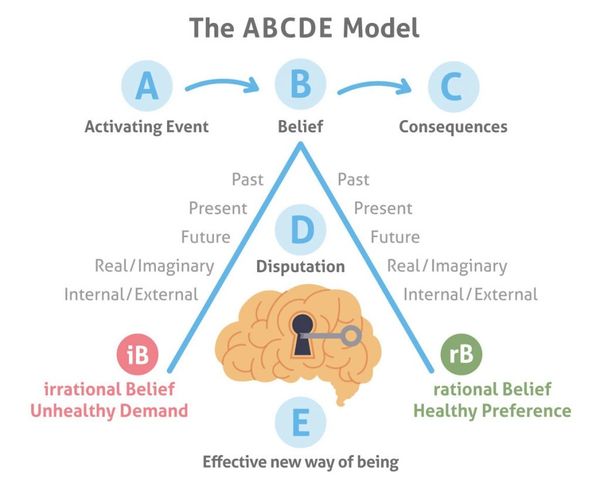
A - Activating Event
This is the initial event or situation that triggers a response, which can be external or internal.
B - Beliefs
These are the beliefs or interpretations about the activating event. They can be rational (helpful) or irrational (unhelpful), often resulting in emotional and behavioral consequences.
C - Consequences
This refers to the emotional and behavioral outcomes that result from your beliefs about the activating event.
D - Disputing Beliefs
In this step, you challenge and question the irrational beliefs that lead to negative emotions and behaviors. This involves examining the evidence for and against these beliefs.
E - Effective New Beliefs
After disputing irrational beliefs, you replace them with more rational, constructive beliefs. This new perspective fosters healthier emotional responses and behaviors.
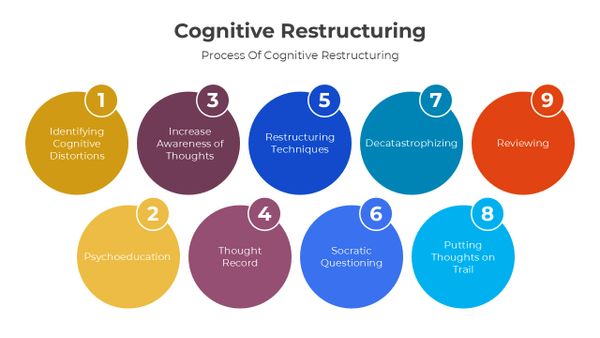
Cognitive restructuring is a therapeutic process used primarily in Cognitive Behavioral Therapy (CBT) and Rational Emotive Behavior Therapy (REBT) to help individuals identify and change negative thought patterns. This technique aims to alter maladaptive thinking, resulting in improved emotional responses and behaviors.
Identifying Negative Thoughts
The first step involves recognizing automatic negative thoughts that arise in response to various situations. These thoughts can be irrational or biased and often contribute to feelings of anxiety, depression, or low self-esteem.
Challenging Negative Thoughts
Once identified, the next step is to critically evaluate these negative thoughts. This involves asking questions such as:
- What evidence supports this thought?
- Are there alternative explanations?
- What would I tell a friend in a similar situation?
Replacing Negative Thoughts
After challenging the negative beliefs, individuals work on replacing them with more balanced, rational thoughts. This might involve phrasing the thoughts more positively or realistically, thus reducing their emotional impact.
Testing New Beliefs
Implementing the new beliefs through practice in real-life situations helps reinforce the cognitive changes. This includes observing reactions and feelings when applying these new thoughts.
Reinforcing Positive Change
Regular practice of cognitive restructuring leads to healthier thought patterns over time, contributing to better emotional responses and behaviors. Keeping a thought diary can aid this process, providing evidence of improved thinking and emotional regulation.
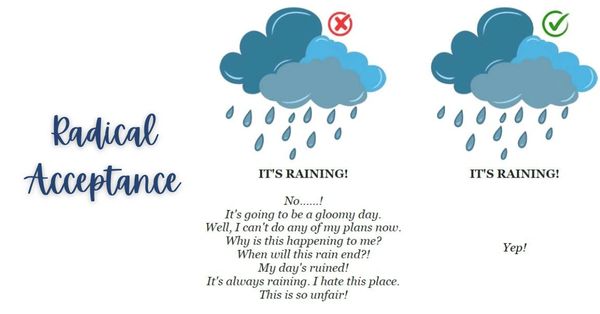
Radical Acceptance is a concept that stems from Dialectical Behavior Therapy (DBT) but can be effectively integrated with Rational Emotive Behavior Therapy (REBT). This practice involves accepting reality as it is, rather than how we wish it to be, which can significantly complement the principles of REBT.
How Radical Acceptance Works in REBT
Acceptance of Reality
Radical acceptance encourages individuals to embrace their current circumstances without judgment or resistance. This does not mean condoning negative situations; rather, it involves recognizing and accepting them as they are. This acceptance serves as a foundation for coping strategies.
Acknowledgment of Emotions
Accepting reality allows individuals to recognize their emotional responses without denial or suppression. In REBT, understanding these emotions is crucial for identifying the underlying irrational beliefs that contribute to negative feelings.
Challenging Irrational Beliefs
With acceptance in place, individuals can more clearly identify irrational beliefs influencing their emotional reactions. This step is vital in REBT, where questioning the validity of these beliefs can lead to significant cognitive restructuring.
Shifting Focus to Changeable Aspects
Radical acceptance emphasizes that some aspects of our situations may be beyond our control. By accepting what cannot be changed, individuals are free to focus on what they can change—namely, their thoughts and behaviors. This aligns with REBT’s core tenet of focusing on shifting irrational beliefs to rational ones.
Creating a Path Forward
Acceptance alleviates some emotional burdens, making it easier to take proactive steps toward improvement. Once the reality of a situation is accepted, individuals can better analyze their choices and responses, leading to healthier outcomes in line with REBT principles.